




What are the common manufacturing processes for powder metal gears?
 Jul 22, 2025|
 Hey there! As a supplier of powder metal gears, I've been in the thick of the industry for quite some time. Today, I'm stoked to share with you the common manufacturing processes for powder metal gears. These processes are the backbone of what we do, and understanding them can give you a better grasp of the quality and performance of the gears you're looking to buy.
Powder Mixing
The first step in making powder metal gears is powder mixing. It's like baking a cake - you need to get the right ingredients in the right proportions. We start with different metal powders, which can include iron, copper, nickel, and others. These powders are carefully measured and then mixed together in a special machine. The goal is to create a homogeneous mixture where all the particles are evenly distributed. This is crucial because it affects the final properties of the gear, like its strength and hardness.
The mixing process can take a while, depending on the complexity of the powder blend. We use high - speed mixers that tumble and stir the powders to ensure a good mix. Sometimes, we also add lubricants or binders to the powder mixture. These additives help with the next step in the process, which is compaction.
Compaction
Once the powder is well - mixed, it's time for compaction. This is where we take that loose powder and turn it into the shape of a gear. We use a die, which is a special tool that has the exact shape of the gear we want to make. The powder is poured into the die cavity, and then a punch applies a high pressure to compress the powder.
The pressure used in compaction can be pretty intense, usually in the range of 40 - 80 tons per square inch. This high pressure forces the powder particles to bond together and take on the shape of the die. The result is a green compact, which is a pre - formed gear that's still relatively fragile. It has the basic shape of the final gear, but it's not fully dense yet.
Sintering
After compaction, the green compact goes through sintering. This is a heat - treatment process that takes place in a furnace. During sintering, the compact is heated to a temperature just below the melting point of the main metal in the powder mixture. For example, if we're using iron - based powders, the sintering temperature might be around 1100 - 1200 degrees Celsius.
As the compact heats up, several things happen. First, the lubricants or binders that were added during powder mixing burn off. Then, the metal particles start to diffuse and bond together at the atomic level. This makes the gear stronger and more dense. Sintering also improves the gear's mechanical properties, such as its hardness, toughness, and wear resistance.

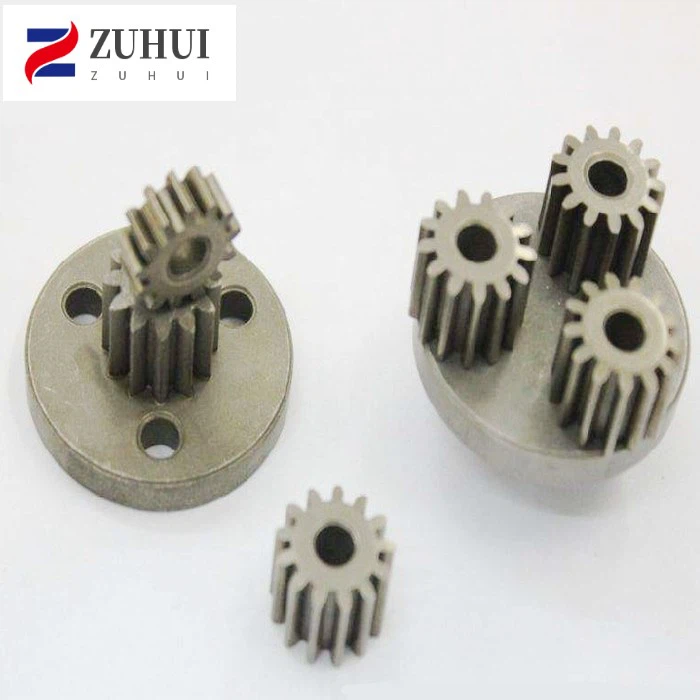
If you're interested in a specific type of sintered gear, check out our Sintering Planetary Gear. These gears are made using the same sintering process and are known for their high performance.
Secondary Operations
In some cases, after sintering, the gear might need some secondary operations. These operations are done to improve the gear's accuracy, surface finish, or other properties. One common secondary operation is machining. We might use processes like milling, grinding, or turning to remove any excess material, adjust the dimensions, or create a smoother surface.
Another secondary operation is heat - treating. Sometimes, we need to further enhance the gear's hardness or other mechanical properties by heat - treating it again. This can involve processes like quenching and tempering.
Finishing
The final step in the manufacturing process is finishing. This includes cleaning the gear to remove any dirt or debris from the previous processes. We might also apply a coating to the gear to protect it from corrosion or improve its wear resistance. Coatings can be things like zinc plating, nickel plating, or a special polymer coating.
Quality Control
Throughout the entire manufacturing process, quality control is super important. We use a variety of techniques to ensure that the gears meet the required standards. For example, we use dimensional inspection tools like calipers and micrometers to measure the gear's size and shape. We also use hardness testers to check the gear's hardness and non - destructive testing methods like ultrasonic testing to detect any internal defects.
Advantages of Powder Metal Gears
Now that you know the manufacturing processes, let's talk about why powder metal gears are a great choice. One of the biggest advantages is cost - effectiveness. The powder metal manufacturing process allows us to produce gears with high precision and complex shapes at a relatively low cost. We can also achieve high production volumes, which further reduces the cost per unit.
Another advantage is material efficiency. In powder metal manufacturing, we use only the amount of material needed to make the gear. There's very little waste compared to other manufacturing methods like machining from solid stock.
Powder metal gears also offer excellent mechanical properties. They can be designed to have specific hardness, strength, and wear resistance characteristics depending on the application. This makes them suitable for a wide range of industries, from automotive to aerospace.
Our Product Range
We offer a wide range of powder metal gears, including Powder Metallurgy Gear and Small Pinion Gear. Our gears are made using the latest manufacturing techniques and are of the highest quality. Whether you need a small, precision gear for a medical device or a large, heavy - duty gear for an industrial machine, we've got you covered.
Conclusion
So, there you have it - the common manufacturing processes for powder metal gears. From powder mixing to finishing, each step plays a crucial role in creating high - quality gears. If you're in the market for powder metal gears, we'd love to talk to you. Whether you have a specific design in mind or need help choosing the right gear for your application, we're here to assist. Just reach out to us, and let's start a conversation about your gear needs.
References
- "Powder Metallurgy: Principles and Applications" by Randall M. German
- "Manufacturing Engineering and Technology" by S. Kalpakjian and S. R. Schmid