High Quality
We take pride in the craftsmanship of our products and ensure that each one meets our strict standards for quality.
Delivery Speed
Cost, quality and delivery speed are the three KPI of enterprise performance and business competition.
Professional Team
The members of the team are highly skilled and proficient in their respective roles and possess the necessary education, training, and experience to excel in their jobs.
After-sales Service
Our factory has more than 10 years of working experience researching and selling. All after-sale requests will be responded in 24 hours.

Single Helical Gear
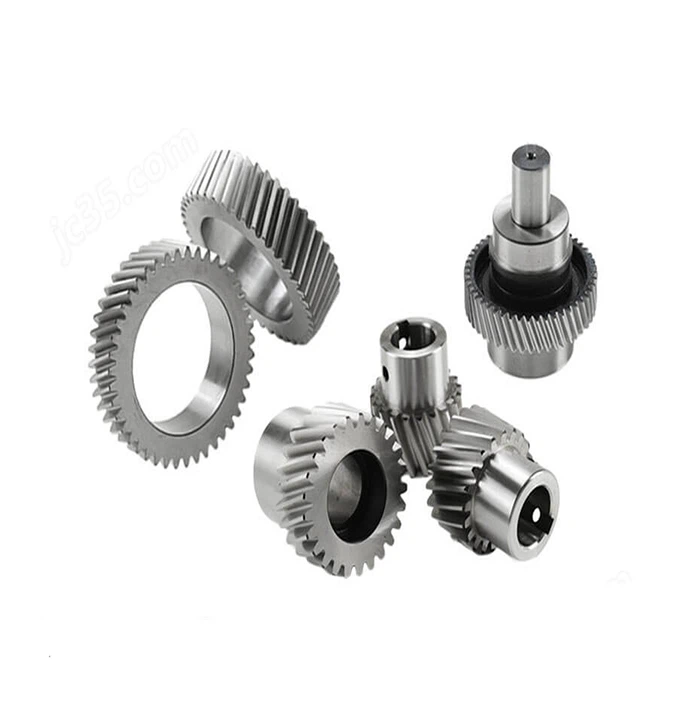
This type of helical gear has teeth that are inclined at an angle to the gear axis but only on one side of the gear. They are used mainly for transmitting motion and power between parallel shafts.
Double Helical Gear
Also known as ‘Herringbone Gear’ due to its shape, this gear is similar to a single helical gear but has teeth on both sides of the gear. They are used for transmitting motion and power between parallel shafts while eliminating axial thrust through opposing helix angles.
Helical Rack And Pinion Gear
This is a type of helical gear that is used to convert rotary motion to linear motion or vice versa. The gear consists of a helical rack, which is a linear gear, and a pinion, which is a helical gear. They are used in various industrial and automotive applications.
Skew Helical Gear
This type of gear is designed to transmit motion and power between non-parallel shafts. They are used mainly in applications where non-straight shafts or angled transmissions are needed.
Parallel Helical Gear
This type of gear is similar to spur gears in shape but has inclined teeth. They are primarily used where high torque transmissions are needed or where noise and vibration need to be minimized.
Application of Helical Gear
Automotive Industry
Helical gears are extensively used in cars, trucks, and other vehicles. They are mainly used in the transmission, engine, and differential gear systems.
Industrial Machinery
Many types of industrial machinery use helical gears, including machine tools, printing presses, and textile machines. Helical gears can handle high loads, minimize noise and vibration, and ensure smooth and precise operation.
Power Generation
Helical gears are used in power generation systems such as turbines, generators, and wind turbines. They ensure efficient power transmission and reduce wear and tear.
Aerospace Industry
Helical gears are used in various aircraft systems, including engines, landing gears, and flight control systems. They are lightweight, durable, and can withstand high-speed and high-temperature operations.
Marine Industry
Helical gears are used in marine propulsion systems and winches. They are resistant to saltwater and can operate in harsh marine environments.
A spur gear is a cylindrical gear. It is the simplest and most common type. Spur gears are used in numerous applications to transmit power and torque between parallel shafts, converting rotational motion between them. They can handle high-speed rotations but produce a lot of noise and vibration due to their teeth engaging all at once. A helical gear is a cylindrical gear with teeth that are angled and cut at an angle to the gear axis. The teeth provide a more gradual engagement, resulting in quieter and smoother operation. Helical gears transmit more torque due to their angled teeth and are less prone to tooth wear. However, they are difficult to manufacture and require precise machining. In general, helical gears are preferred for applications that require quieter operation, higher load capacity, and smoother performance over spur gears.
Prepare The Gear: Before installation, you need to make sure that the gear is clean and free from any damage or defects. Check the gear teeth for signs of wear or damage. Also, make sure the gear fits snugly on the shaft.
Install The Gear: Once the gear is prepared, it's time to install it. To do this, you will need to slide it onto the shaft, making sure it aligns with any other gears it will mesh with. You may need to use a mallet or press to get the gear into place.
Secure The Gear: Once the gear is in place, you will need to secure it. This can be done in several ways, depending on the application. One common method is to use a retaining ring or snap ring, which fits into a groove on the shaft and holds the gear in place. You can also use set screws, pins, or bolts to secure the gear to the shaft.
Check The Alignment: After securing the gear, check the alignment to make sure it meshes correctly with any other gears it will interact with. If the alignment is off, you may need to adjust the position of the gear or the shaft.
Test The Gear: Once the gear is installed and aligned, test it to make sure it's working correctly. Run the gears to check for any unusual noises or vibrations. If everything checks out, your helical gear should be ready to use.
Components of Helical Gear

Gear Teeth
Gear Shaft
Gear Housing
Bearings
Lubrication System
Material of Helical Gear
Helical gears are an important part of many machines, from automobiles to industrial equipment. They are used to transmit power from one rotating shaft to another, allowing for smooth, quiet and efficient operation. The materials used to manufacture helical gears play a vital role in their performance, durability, and overall quality. The most common materials used to manufacture helical gears include steel, cast iron, brass, bronze, plastic and composite materials. Depending on the application requirements, each material has its own characteristics, including strength, wear resistance, corrosion resistance and cost-effectiveness.
How Do You Avoid Noise and Vibrations in Helical Gears
One of the most effective methods of reducing noise and vibrations in helical gears is by using high-quality gear materials and manufacturing processes, which can help ensure that the gears are properly shaped and dimensioned, reducing the chances of misalignment or uneven tooth engagement. In addition, using lubricants designed for helical gears can further help reduce noise and vibrations. These lubricants can minimize friction and wear among the gear teeth. As a result, the amount of noise generated during operation is reduced. Another way to ensure that helical gears do not produce noise and vibrations is by properly installing and aligning them. It involves carefully checking the gear teeth for signs of damage or wear. Likewise, ensuring that the gears are properly positioned and secured within the gear mechanism.
Determine the transmission ratio
The transmission ratio is the ratio of the number of teeth of the driven gear to the number of teeth of the driving gear. This can be calculated by dividing the number of teeth on the driven gear by the number of teeth on the drive gear.
Calculate the pitch circle diameter
The pitch circle diameter is the diameter of the circle that intersects the gear teeth. It can be calculated by multiplying the number of teeth by the module (or pitch) of the gear.
Determine the helix angle
The helix angle is the angle between the gear end face and the plane perpendicular to the gear axis. It is usually measured in degrees and can be determined using specialized software or using mathematical formulas.
Calculate the lead
The lead is the straight-line distance between corresponding points on adjacent teeth along the spiral. It can be calculated by multiplying the pitch (or circumference) of the gear by the sine of the helix angle.
Determine the center distance
The center distance is the distance between the centers of the two gears. It can be calculated by adding the pitch diameters of the two gears and dividing by two.
Verify the design
After all parameters have been calculated, it is important to verify that the gear design meets the required performance standards. This may involve performing stress analysis, checking for interference, and ensuring that gear geometry is within acceptable tolerances.
Inspection is one of the most crucial steps in maintaining helical gears. Regular inspections help identify wear and tear, damage, or misalignment in the gear teeth. Inspections should be carried out at least once a year, and more frequently for gears that are subject to heavy loads or high speeds. It is important to inspect gears for chipped, worn, or misshapen teeth, as well as any signs of corrosion.
Lubrication is an essential aspect of maintaining helical gears. Proper lubrication helps reduce friction, wear, and tear of the gear teeth. The lubricant should be changed periodically as recommended by the manufacturer or as per the operating conditions of the gear. Lubrication can be done manually, or through automated lubrication systems.
Misalignment of helical gears can lead to increased wear and tear, noise, and decreased performance. It is crucial to ensure that the gears are properly aligned during installation and periodically checked during maintenance. Misalignment can be caused by improper installation or excessive load on the gears. Proper alignment can be achieved through shimming, using laser alignment, or other alignment methods.
Helical gears are designed to distribute load evenly across the gear teeth. Uneven loading can lead to excessive wear and tear, noise and reduced performance. It is important to ensure that the load is distributed evenly across the gear teeth. This can be achieved by ensuring proper alignment, reducing the load on the gears, or by using other load distribution methods.
Temperature is a critical factor in maintaining helical gears. High temperatures can cause increased wear and tear, reduced lubrication, and ultimately, gear failure. It is important to ensure that the gears operate within the recommended temperature range. The temperature can be controlled by using cooling systems, increasing ventilation, or other methods.
Load Capacity
The lubricant must be capable of withstanding the load placed on the helical gears, without breaking down or losing its protective properties.
Operating Temperature
The temperature at which the gears operate must be within the range that the lubricant is designed to function effectively. If the temperature is too high, the lubricant will break down and lose its effectiveness.
Viscosity
The viscosity of the lubricant must be chosen carefully. If the viscosity is too high, it may cause excessive friction and overheating, leading to gear damage. If the viscosity is too low, it may not provide sufficient protection to the gears.
Environmental Considerations
Environmental factors such as humidity, dust, and contaminants can affect the performance of the lubricant. The lubricant chosen should be capable of resisting these environmental factors.
Compatibility
The lubricant must be compatible with the material used to manufacture the gears. Compatibility issues can lead to degradation of the gears or a loss of lubrication effectiveness.


We're well-known as one of the leading helical gear manufacturers and suppliers in China. If you're going to wholesale high precision helical gear at competitive price, welcome to get free sample from our factory. Also, customized service is available.
helical gear promotion, helical gear wholesale, helical gear interchangeability