




How to improve the performance of a small pinion gear?
 Jul 04, 2025|
 As a supplier of small pinion gears, I understand the critical role these components play in various mechanical systems. Small pinion gears are essential in transmitting power and motion, and their performance directly impacts the efficiency and reliability of the entire machinery. In this blog, I will share some effective strategies on how to improve the performance of a small pinion gear, drawing from my years of experience in the industry.

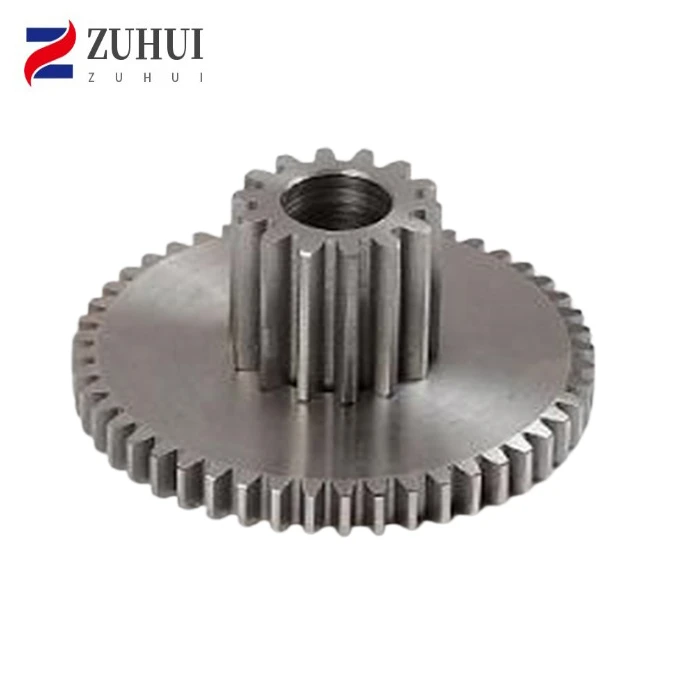
Material Selection
The choice of material is fundamental to the performance of a small pinion gear. Different materials offer distinct properties such as strength, hardness, wear resistance, and corrosion resistance. For high - performance applications, alloy steels are often a popular choice. They have excellent strength and toughness, which can withstand high loads and prevent gear failure. For example, 4140 alloy steel is known for its good hardenability and machinability, making it suitable for small pinion gears in heavy - duty applications.
Another option is powder - metallurgy materials. Starter Sun Pinion Gear made from powder - metallurgy offer several advantages. Powder - metallurgy allows for precise control of the gear's shape and density, resulting in gears with uniform properties. These gears can also be manufactured with complex geometries, which may not be easily achievable with traditional machining methods. Additionally, powder - metallurgy gears often have good wear resistance due to the fine - grained structure of the sintered material.
For applications where weight is a concern, such as in aerospace or automotive industries, lightweight materials like aluminum alloys can be considered. However, aluminum alloys have lower strength compared to steels, so they are typically used in low - load applications.
Gear Design Optimization
Proper gear design is crucial for improving the performance of a small pinion gear. One of the key design parameters is the gear ratio. The gear ratio determines the speed and torque relationship between the pinion and the mating gear. By carefully selecting the gear ratio, we can optimize the power transmission efficiency of the gear system.
The tooth profile of the pinion gear also has a significant impact on its performance. The most common tooth profile is the involute profile, which offers smooth and efficient power transmission. However, for some special applications, modified tooth profiles may be required. For example, a crowned tooth profile can help to reduce edge loading and improve the contact pattern between the gears, resulting in less wear and noise.
In addition, the number of teeth on the pinion gear should be carefully considered. A larger number of teeth can increase the contact ratio, which distributes the load over more teeth and reduces the stress on each tooth. However, increasing the number of teeth also increases the size of the gear, so a balance needs to be struck based on the specific application requirements.
Manufacturing Precision
High - precision manufacturing is essential for achieving optimal performance of small pinion gears. Any errors in the manufacturing process, such as inaccurate tooth profiles, misaligned axes, or surface roughness, can lead to increased noise, vibration, and wear.
CNC machining is a widely used manufacturing method for small pinion gears. It offers high precision and repeatability, allowing for the production of gears with tight tolerances. During the machining process, it is important to use sharp cutting tools and proper cutting parameters to ensure a smooth surface finish.
Heat treatment is another important step in the manufacturing process. Heat treatment can improve the hardness, strength, and wear resistance of the gear. For example, carburizing is a common heat - treatment process for small pinion gears made of low - carbon steels. It involves diffusing carbon into the surface of the gear, followed by quenching and tempering to form a hard and wear - resistant surface layer.
Lubrication
Proper lubrication is vital for reducing friction and wear between the teeth of the small pinion gear. Lubricants can form a thin film between the gear surfaces, preventing direct metal - to - metal contact and reducing the coefficient of friction.
There are various types of lubricants available, including mineral oils, synthetic oils, and greases. The choice of lubricant depends on factors such as the operating temperature, load, and speed of the gear system. For high - speed applications, synthetic oils are often preferred due to their excellent thermal stability and low viscosity.
In addition to the type of lubricant, the lubrication method also needs to be considered. Splash lubrication is a simple and cost - effective method, where the gear rotates in a bath of lubricant. However, for high - speed or high - load applications, forced lubrication systems, such as oil jets or pumps, may be required to ensure adequate lubrication of the gears.
Maintenance and Inspection
Regular maintenance and inspection are necessary to ensure the long - term performance of small pinion gears. During maintenance, the lubricant should be changed at regular intervals to prevent the accumulation of contaminants and the degradation of the lubricant properties.
Inspection of the gears can help to detect any signs of wear, damage, or misalignment early. Visual inspection can be used to check for obvious signs of wear, such as tooth pitting or scoring. Non - destructive testing methods, such as ultrasonic testing or magnetic particle inspection, can be used to detect internal defects in the gears.
If any problems are detected during the inspection, appropriate measures should be taken immediately. For example, if the gear is worn beyond the acceptable limit, it should be replaced. If there is misalignment between the gears, the alignment should be corrected to prevent further damage.
Surface Treatment
Surface treatment can significantly enhance the performance of small pinion gears. One common surface - treatment method is nitriding. Nitriding involves diffusing nitrogen into the surface of the gear, forming a hard and wear - resistant nitride layer. This layer can improve the gear's resistance to wear, corrosion, and fatigue. Sintering Metal Planetary Gear can also benefit from nitriding treatment to enhance their performance.
Another surface - treatment option is coating. Coatings such as titanium nitride (TiN) or diamond - like carbon (DLC) can provide a low - friction and wear - resistant surface. These coatings can reduce the coefficient of friction between the gears, resulting in less energy loss and improved efficiency.
Noise and Vibration Reduction
Noise and vibration are common problems in gear systems, which can not only affect the user experience but also lead to premature wear and failure of the gears. To reduce noise and vibration, several measures can be taken.
As mentioned earlier, proper gear design, such as using a crowned tooth profile or increasing the contact ratio, can help to improve the contact pattern between the gears and reduce noise. In addition, balancing the gears can also reduce vibration. Unbalanced gears can cause excessive vibration, which can lead to increased wear and damage to the gear system.
Using flexible couplings or vibration - damping materials can also help to isolate the gear system from the surrounding environment and reduce the transmission of noise and vibration.
Quality Control
Quality control is an integral part of the manufacturing process for small pinion gears. At our company, we have a comprehensive quality - control system in place to ensure that every gear we produce meets the highest standards.
We use advanced inspection equipment, such as coordinate measuring machines (CMMs), to measure the dimensions and geometries of the gears with high precision. In addition, we conduct material testing to verify the mechanical properties of the materials used in the gears.
Before the gears are shipped to the customers, they undergo a final inspection to ensure that they are free from any defects. Our quality - control team also keeps detailed records of all the inspection results, which can be used for traceability and continuous improvement.
Conclusion
Improving the performance of small pinion gears requires a comprehensive approach that includes material selection, gear design optimization, high - precision manufacturing, proper lubrication, maintenance, and quality control. By implementing these strategies, we can enhance the efficiency, reliability, and durability of small pinion gears, meeting the diverse needs of our customers.
If you are in need of high - performance small pinion gears or have any questions about gear performance improvement, please feel free to contact us. We are committed to providing you with the best - quality products and professional technical support.
References
- Buckingham, E. (1949). Analytical Mechanics of Gears. McGraw - Hill.
- Dudley, D. W. (1962). Gear Handbook. McGraw - Hill.
- Townsend, D. P. (1992). Dudley's Gear Handbook. Marcel Dekker.