




How do sintered metal gears perform in dusty environments?
 Aug 20, 2025|
 Hey there! As a supplier of sintered metal gears, I've had my fair share of experiences and insights into how these gears perform in different environments. Today, I'm gonna dive deep into the topic of how sintered metal gears hold up in dusty environments.
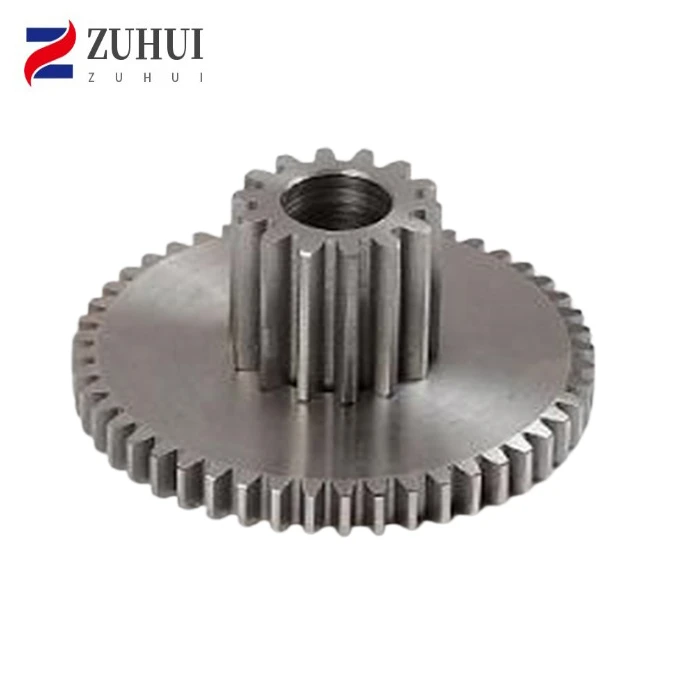
First off, let's talk a bit about what sintered metal gears are. Sintered metal gears are made through a powder metallurgy process. In this process, metal powders are compacted into the desired shape and then heated in a controlled environment to bond the particles together. This method allows for the production of gears with complex shapes and precise dimensions. There are various types of sintered metal gears, like Powdered Metal Bevel Gears, Powder Metallurgy Gear, and Double Spur Gear. Each type has its own unique characteristics and applications.
Now, let's get into the nitty - gritty of dusty environments. Dusty environments can be found in a whole bunch of industries, such as mining, construction, and agriculture. In these places, there's a constant presence of fine particles that can potentially cause problems for mechanical components, including gears.
One of the main concerns when it comes to gears in dusty environments is wear. Dust particles can act like abrasives, rubbing against the gear teeth and causing them to wear down over time. But here's the good news: sintered metal gears are pretty tough in this regard. The sintering process creates a dense and hard structure that can resist the abrasive action of dust to a certain extent.
The material composition of sintered metal gears also plays a big role. We can choose different metal powders and additives during the manufacturing process to enhance the gear's wear resistance. For example, adding elements like chromium or molybdenum can increase the hardness and toughness of the gear, making it better able to withstand the abrasion caused by dust.
Another aspect to consider is lubrication. In a dusty environment, dust can contaminate the lubricant, reducing its effectiveness. However, sintered metal gears have a unique advantage here. They can be impregnated with lubricants during the manufacturing process. The porous structure of the sintered metal allows it to hold a significant amount of lubricant, which can be gradually released during operation. This helps to keep the gear teeth lubricated, even when the external lubricant gets contaminated.
But it's not all smooth sailing. There are still some challenges that sintered metal gears face in dusty environments. One issue is the potential for dust to clog the pores of the sintered metal. If the pores get clogged, the gear's ability to hold and release lubricant can be compromised. This can lead to increased friction and wear. To mitigate this problem, proper maintenance is crucial. Regular cleaning and inspection of the gears can help to remove any accumulated dust and ensure that the pores remain open.
Another challenge is the impact of dust on the gear's noise and vibration levels. Dust particles can cause uneven wear on the gear teeth, which can lead to increased noise and vibration during operation. This not only affects the performance of the gear but also the overall operation of the machinery. To address this, we can use advanced manufacturing techniques to ensure the gears have a high - quality surface finish. A smooth surface finish reduces the chances of dust getting trapped and causing uneven wear.
In addition to the technical aspects, cost - effectiveness is also an important factor. Sintered metal gears are generally more cost - effective than some other types of gears. The powder metallurgy process allows for high - volume production with relatively low material waste. This means that in dusty environments where gears may need to be replaced more frequently due to wear, sintered metal gears can offer a more economical solution.
Now, let's take a look at some real - world applications. In the mining industry, sintered metal gears are used in conveyor systems. These systems are constantly exposed to dust from the mined materials. The ability of sintered metal gears to resist wear and maintain lubrication makes them a great choice for this application. In construction equipment, such as bulldozers and excavators, sintered metal gears are used in the transmission systems. The tough and reliable performance of these gears in dusty construction sites ensures the smooth operation of the equipment.
When it comes to choosing the right sintered metal gear for a dusty environment, there are a few things to keep in mind. First, consider the size and type of dust particles. If the dust is very fine, you may need a gear with a higher level of wear resistance. Second, think about the operating conditions, such as temperature and load. Higher temperatures can affect the lubrication properties of the gear, so you may need to choose a gear with a lubricant that can withstand those conditions.

As a supplier of sintered metal gears, I've seen firsthand how these gears can perform in dusty environments. We're constantly working on improving our products to meet the challenges of these harsh conditions. Whether you're in the mining, construction, or any other industry that deals with dust, we have the right sintered metal gear solutions for you.
If you're interested in learning more about our sintered metal gears or have any specific requirements for your application in a dusty environment, don't hesitate to reach out. We'd be more than happy to have a chat and help you find the perfect gear for your needs.
References:
- Smith, J. (2018). "Powder Metallurgy: Principles and Applications". Wiley.
- Brown, A. (2020). "Gears in Harsh Environments: Challenges and Solutions". Journal of Mechanical Engineering.